Skip to content




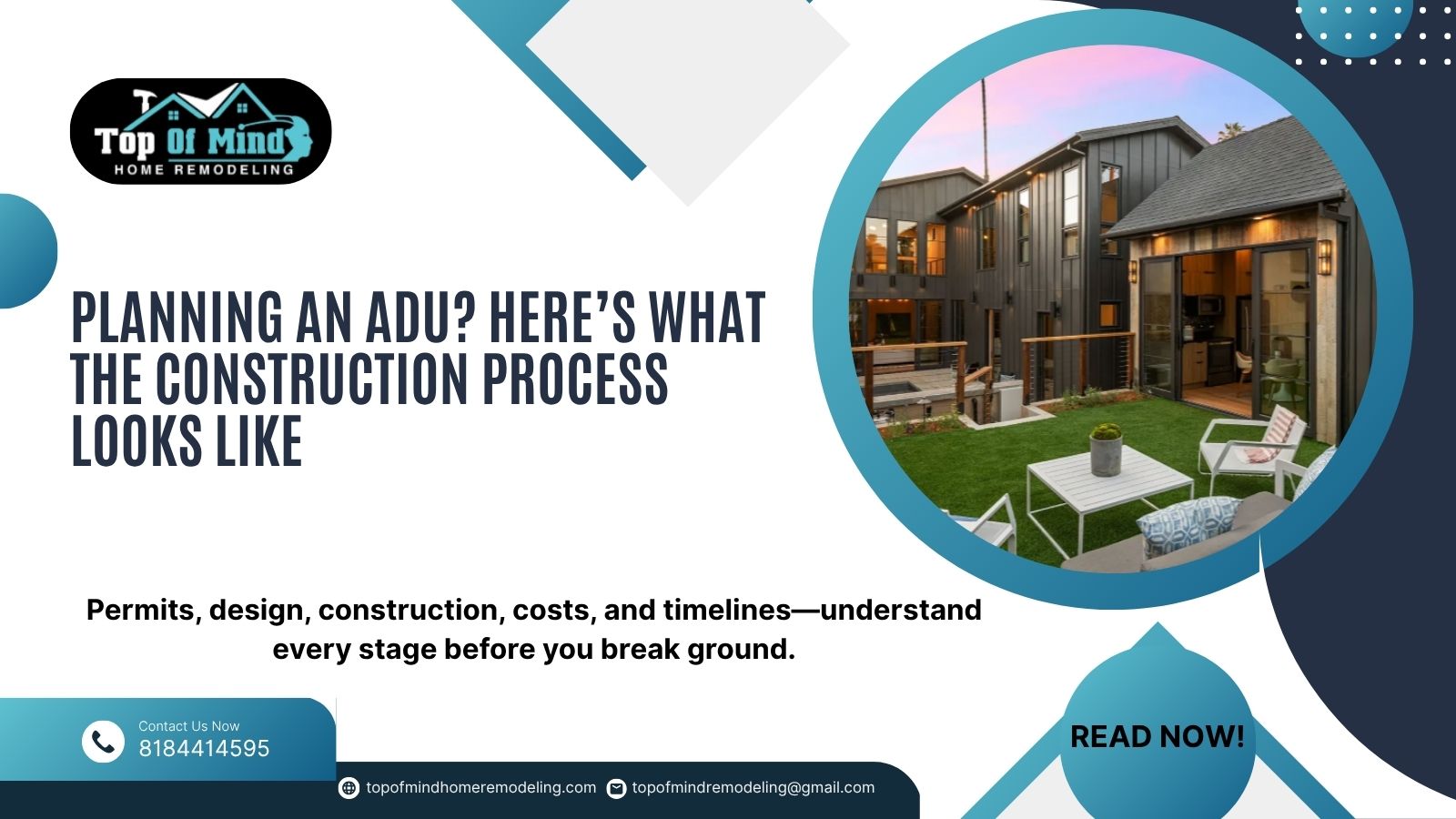
For most Los Angeles homeowners, the honest answer is yes. A permitted ADU investment can lift your property value, bring in roughly $1,800 to $4,000 or more a month in rent depending on your neighborhood, and return somewhere in the neighborhood of 8 to 12 percent a year once you combine rent with appreciation, based on industry estimates rather than a fixed formula. Those are strong numbers for a residential property, and you get a flexible living space on top of them.
That said, “good investment” is not one number that applies to every backyard. It depends on your lot, your budget, and what you want the unit to do.
Most homeowners here don’t wake up dreaming about an accessory dwelling unit. It usually starts with a problem. Rent money you’d rather keep in your own pocket. A parent who needs to live close by. A grown kid moving back after college with nowhere easy to land. Then someone mentions building a small second home in the yard, and the first fair question is: is this actually worth it? Before diving into the numbers, it helps to have a sense of the full ADU construction process, since cost and return both trace back to how the project actually gets built. Below is the real picture for LA, in plain numbers, every figure here is a range or an estimate, not a guarantee for your specific property.
Key Takeaways
- A permitted ADU can add real value to an LA property, though the exact percentage varies widely by study, neighborhood, and lot, so treat any single number as directional.
- ADU rental income in Los Angeles commonly falls between about $1,800 and $4,000 a month, with location doing most of the work in where you land in that range.
- Combined returns (rent plus appreciation) are often estimated around 8 to 12 percent a year, but this is a market estimate, not a promise, and depends heavily on financing and build cost.
- Typical LA construction costs run roughly $100,000 for a garage conversion up to $450,000+ for a larger detached unit, and these figures move with material costs, labor, and site conditions.
- California sets minimum size allowances, not fixed rules; most Los Angeles homeowners actually build smaller than the legal maximum.
- Payback timelines commonly range from about 7 to 15 years through rent alone, varying by ADU type and neighborhood.
- Figures throughout this guide are current estimates as of 2026 and may change as material costs, interest rates, and local rental markets shift.
What an ADU is, in Plain Terms
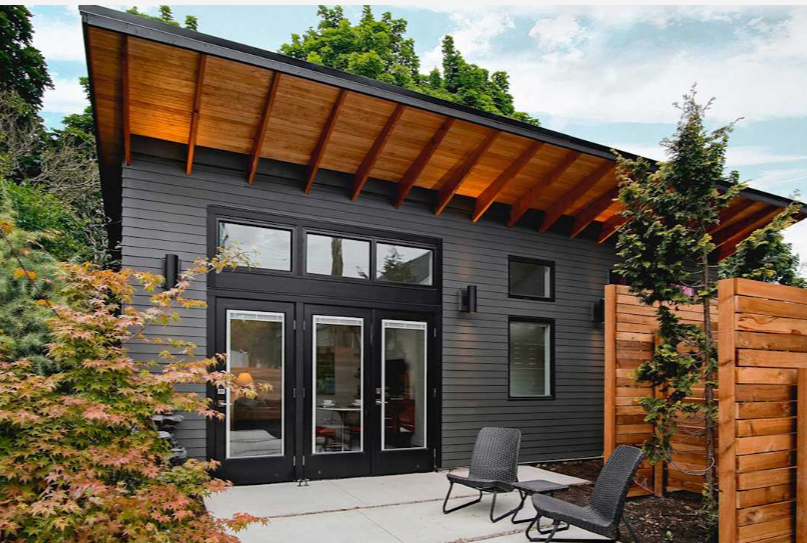
An accessory dwelling unit, or ADU, is a second, self-contained home on the same lot as your main house. It has its own kitchen, its own bathroom, and its own entrance. You’ve probably heard the nicknames: granny flat, backyard cottage, in-law suite, and casita. They all point to the same type of backyard unit.
Three main shapes come up across Los Angeles:
- Detached: a standalone unit built fresh in the yard.
- Attached: a unit connected to your existing house.
- Conversion: turning something you already have, usually a garage, into a livable home.
Whichever route you take, the finished product is a legal, livable home that can house family or bring in rent.
Are ADUs Actually a Good Investment in Los Angeles?
For most LA property owners, the case for investing in an ADU is a strong one, and the local market is a big reason why. Strong rental demand, a persistent housing shortage, and some of the most flexible ADU laws in the country make Los Angeles one of the more favorable places in California to build one.
Here’s the short version for people skimming. A permitted ADU commonly adds meaningful value to a property, a rentable unit in LA often brings in ADU rental income in the low thousands per month, and combined returns are commonly estimated in the 8 to 12 percent range once rent and appreciation are counted together. That estimate compares well against many traditional investments, though as with any real estate figure, actual results vary by property and market timing.

What Are the Real Benefits of an ADU Investment?
It pushes up your property value
A second livable home on your lot means a buyer gets two places instead of one, and appraisers have increasingly caught up to that. Estimates of how much value an ADU adds vary widely by study and market, so this is one figure worth treating with real caution. One UC Irvine analysis of Los Angeles parcels found that adding an ADU raised property value by roughly 40 to 60 percent, while many other industry estimates land lower. The one constant across sources is that a permitted, well-built unit tends to add real, lasting value, while the exact figure depends on your lot, your neighborhood, and local comps. Getting the unit permitted is what makes that value stick; an unpermitted structure can do the opposite and scare buyers off.
It brings in steady rental income
Rent is the engine that pays the whole thing back. In the LA market, a permitted ADU commonly rents for about $2,000 to $4,000 a month, with compact studios sitting lower and larger detached units in strong neighborhoods sitting higher. Coastal and Westside areas tend to command the top of that range, while San Fernando Valley units often land closer to $2,000 to $3,200 for a one-bedroom. These are general market patterns, not fixed prices, and rents shift with the broader economy. That income can cover a chunk of your mortgage, offset the build cost, or simply add to your account each month.
It flexes with your life
Not every homeowner builds an ADU to rent it out, and that’s completely fine. The space works for aging parents who want their independence and their family close at the same time. It works for adult kids saving up for a place of their own. It works as a quiet home office, a guest house, or a spot you downsize into later while renting out the big house. That flexibility is a real part of the ADU long-term value. Your needs shift over the years, and the unit can quietly change jobs right along with you.
It builds equity you keep
Rent is monthly cash. The value bump is a one-time gain you realize when you sell or refinance. Both are real, and together they’re why an accessory dwelling unit investment tends to hold up better than most home upgrades. A new kitchen is nice and it helps at resale. A whole extra income-producing home on your lot is a different category of return.
What Kind of ROI Can an LA ADU Actually Earn?
The first is value added: take the estimated increase in your property’s worth, subtract what you spent, and that gives a rough equity return. The second is cash flow: your yearly net rent divided by what you put in. That number gives a sense of how hard your money is working each year. Neither figure is exact until you actually sell or refinance, so treat both as planning estimates.
Here’s a simple illustrative LA example, using rounded, hypothetical numbers rather than a specific project. Say a homeowner spends $280,000 on a detached unit and rents it for $2,600 a month. That works out to $31,200 a year before expenses, or a gross yield near 11 percent. After maintenance, insurance, property management, and the occasional vacancy, many owners report landing somewhere in the 6 to 9 percent net range, though this varies by property. On top of that yearly cash flow, a well-permitted unit may add value to the property that shows up when it’s sold.
People also want to know how long until an ADU pays for itself. Through rent alone, LA payback commonly runs anywhere from about 7 to 15 years, and it varies a lot by ADU type. Lower-cost garage conversions can pay back faster, often estimated in the 6- to 10-year range, while pricier detached builds tend to sit toward the longer end. Factor in any appreciation, and the effective payback may come sooner, though this is not guaranteed.
How Much Does an ADU Cost, and How Big Can It Be in LA?
- Garage conversion: roughly $100,000 to $225,000. You’re reusing an existing slab, walls, and roof, so it’s usually the more budget-friendly ADU construction route.
- Attached ADU: roughly $200,000 to $350,000.
- Detached ADU: roughly $250,000 to $450,000, with premium finishes, larger units, or hillside and overlay lots pushing costs higher.
- Junior ADU (JADU): often starts lower, around $50,000 to $150,000, since it’s carved from existing space.
For a broader benchmark, UC Berkeley’s Terner Center has reported a statewide median ADU construction cost of around $150,000 in a past homeowner survey. It’s worth noting this figure is statewide, drawn from an older survey (published in 2021), and that same research actually found Los Angeles County’s own median running lower, closer to $100,000. Construction costs have shifted since then, so treat both numbers as historical reference points rather than a current quote for your project.
Now size, because this is where a lot of blog “rules” get it wrong. California law does not force every ADU into one size. Under state standards summarized in the California HCD ADU Handbook, cities must allow at least an 800-square-foot ADU with four-foot side and rear setbacks, detached units are generally allowed up to about 1,200 square feet, and a JADU is capped at 500 square feet of interior space. Those are baseline allowances set by the state, not targets or requirements to build to the max. In practice, many Angelenos build smaller than the ceiling; some LA County permit reporting suggests a typical permitted backyard unit lands well under 1,000 square feet, though exact medians vary by dataset and year. Your local rules and your actual lot set the real number, so getting the permit and zoning requirements sorted early is what keeps a project on track.
One more current detail worth knowing: California’s updated Title 24 energy standards took effect on January 1, 2026, and new ADUs need to meet them. That makes early energy-efficient design choices less of an optional upgrade and more of a starting point.
What Actually Affects Your ADU’s Return?
Two identical units on two different lots can perform very differently. A few things tend to move the needle.
Location does much of the heavy lifting. A unit near employers, transit, or a campus often rents higher and fills faster, though this varies by micro-neighborhood. Size and layout matter too, since a smart floor plan can make a small footprint feel genuinely livable. Build quality is a quiet factor people tend to underestimate. A well-built unit typically costs less to run and holds its value better, and a lot of that comes down to choosing the right ADU contractor and architect for your specific lot. How the unit is built matters just as much, since efficient design tends to keep monthly operating costs lower and can make the place more appealing to renters who watch their utility bills.
What Does a Real LA ADU Investment Look Like?
Here’s an example from a project Top of Mind Home Remodeling worked on that shows how the math can play out for a Los Angeles ADU build. We worked with a homeowner in Burbank who had an older detached garage and a flat, easy-to-access backyard. Rather than a garage conversion, we recommended a new 600-square-foot detached one-bedroom, partly because Burbank’s constant demand from studio and post-production workers made a private, standalone unit an easier rent than a converted garage would have been.
The build came in around $285,000 all in, including design, permits, and utility separations. Because the lot was flat with straightforward access and no hillside or overlay complications, the project avoided some of the extra costs that stretch budgets on more difficult Valley lots. The finished unit has been renting for about $2,700 a month, or roughly $32,400 a year before expenses, which works out to a gross yield near 11 percent and a net yield in the high single digits after insurance, upkeep, and a small vacancy cushion.
Why LA and California Make Sense Right Now
California has a housing shortage that isn’t going away, and the state has spent years loosening the rules to make ADUs easier to build and approve. That’s a big reason ADUs now account for roughly one in three new housing units in Los Angeles. High rents and tight supply are exactly the conditions that make a backyard unit pencil out.
For a homeowner in the San Fernando Valley or anywhere across LA, the demand is already sitting at your doorstep. You’re not creating a market from scratch. You’re stepping into one that’s been waiting.
Frequently Asked Questions
How much does an ADU increase home value in Los Angeles?
It varies significantly by study, unit type, and neighborhood, so treat any single percentage with real caution. Academic work in LA has found notably large increases, in one case 40 to 60 percent, while many market-based estimates land lower. What’s more consistent across sources is that a permitted, well-built ADU tends to add real value, while unpermitted units often do the opposite.
How long until an ADU pays for itself?
Through rent alone, LA payback commonly runs about 7 to 15 years, though this depends heavily on build cost and rent achieved. Lower-cost garage conversions tend to recover faster, while pricier detached builds sit toward the longer end. Any appreciation the unit brings can shorten the effective payback, but that’s not something to count on in advance.
Is building an ADU worth it in Los Angeles?
For many LA homeowners, the case is a strong one. Solid rental demand, a long-running housing shortage, and flexible state ADU laws make it one of the more favorable returns available on a residential property in general terms. Whether it’s right for you specifically comes down to your lot, your budget, and your goals.
What’s a realistic ROI on an LA ADU?
LA homeowners often cite estimated returns in the 8 to 12 percent range when rental income and appreciation are combined, with net rental yields commonly estimated in the 6 to 9 percent range. These are market estimates, not calculated guarantees, and your actual number depends on build cost, rent achieved, and how the property is financed.
How big can an ADU be in California?
State standards require cities to allow at least an 800-square-foot ADU; detached units are generally allowed up to about 1,200 square feet, and JADUs are capped at 500 square feet. These are legal ceilings and minimums, not build targets. Local rules and your lot set the final size, and many LA homeowners build smaller than the maximum anyway.
The Bottom Line
An ADU investment asks a lot of you up front: money, patience, and a stretch of construction in your backyard. What you get back, when the project goes well, is a second home on your lot that can earn rent, add value to your property, and bend to fit whatever your family needs next. None of these outcomes are guaranteed, and the figures throughout this guide are estimates that can shift with the broader construction and rental markets, so use them as a starting point for your own research rather than a fixed promise.
For homeowners across Los Angeles, that combination is still hard to match among typical home upgrades. If you’re weighing it, the smartest first move is a real conversation with a local ADU builder who can stand in your yard, look at your actual property, and run your real numbers. At Top of Mind Home Remodeling, our team can tell you early whether your lot is a simple build or a more complicated one. That conversation is what separates a good idea from a genuine, property-specific return.