Skip to content




The best bathroom flooring for most LA homes is porcelain tile or luxury vinyl plank, since both are fully waterproof and hold up to daily use. Expect to pay roughly $5 to $30 per square foot installed, and a standard job takes three to five days. Everything past that comes down to your budget, your household, and what the crew finds under your existing floor.
Your bathroom floor works harder than any other floor in your house. It gets splashed constantly, walked on with wet feet, and steamed every single morning, and it still has to look good years later. This bathroom flooring guide covers the materials that actually hold up, what they cost in Los Angeles right now, and what installation really looks like once the work starts. Flooring is only one piece of a much bigger project, and the full scope from layout to plumbing to the final walkthrough sits in our complete guide to bathroom remodeling. This piece keeps the focus on what goes under your feet.
Key Takeaways
- Best bathroom flooring options: Porcelain tile and luxury vinyl plank win for most bathrooms. Natural stone suits high-end, spa-style baths, and sheet vinyl covers tight budgets.
- Cost: Plan for $5 to $30 per square foot installed in LA, with an average near $12.50. Labor alone is 40 to 60 percent of the budget. These are estimated market ranges and will shift with your materials and site conditions.
- Waterproofing is non-negotiable: The membrane under the floor is the step that decides whether your floor lasts. Hidden slab and subfloor problems drive most surprise costs.
- Timeline: A standard LA bathroom floor takes three to five days. Heated mats are an easy add-on if you decide early.
- Skip solid hardwood in any bathroom with a tub or shower. Wood-look porcelain or LVP gives you the look without the water damage.
Why Is Bathroom Flooring Different From the Rest of Your House?
A bathroom floor has to survive constant water, and that one fact rules out most ordinary flooring. Moisture attacks from above through splashes and steam and from below through the subfloor. That’s why waterproof bathroom flooring and solid slip resistance matter more here than in any other room of the house.
The threat from below is the sneaky one. Water can work its way into the subfloor and sit there quietly for months before you notice a soft spot or a musty smell. Flooring that’s perfect for a living room fails fast under these conditions, and wet tile with bare feet is a genuine safety issue on top of that.
Los Angeles adds a few wrinkles of its own. A lot of homes across the Valley and the foothills were built in the 1950s and 60s, and many sit on post-tension concrete slabs. Those slabs can shift slightly and pass temperature changes straight up to your floor, which is why crack-isolation membranes and larger expansion joints show up in so many local jobs. Homes closer to the coast deal with cooler, damper mornings, so moisture control becomes even more important. A bathroom remodel in Pasadena handling flooring work starts from a different subfloor reality than a beach-adjacent place in the South Bay, and the right floor depends heavily on what’s happening beneath it.
Which Bathroom Flooring Materials Actually Work in LA Homes?
The bathroom flooring materials that hold up best in LA are porcelain tile, ceramic tile, and luxury vinyl plank, with natural stone for high-end baths and sheet vinyl for tight budgets. Each one handles water well when it’s installed correctly. Which of these best bathroom flooring options fits your home comes down to budget, feel underfoot, and how much upkeep you’ll take on.
Here’s an honest look at where each material earns its place.
Porcelain and Ceramic Tile
Tile is the most popular bathroom floor in LA for good reason. Porcelain and ceramic are naturally water-resistant; they come in almost any look you can picture, and a well-installed bathroom floor tile lasts decades. Porcelain is denser and tougher than ceramic, which makes it a strong choice for busy family bathrooms.
The tradeoffs are real. Tile feels cold and hard underfoot, especially on those cool coastal mornings, and the grout has to be sealed and maintained. Porcelain and ceramic each behave a little differently once they’re down, and the different types of bathroom tile range widely in finish, slip rating, and long-term upkeep.
Luxury Vinyl Plank (LVP)
Luxury vinyl plank has come a long way. Good LVP is fully waterproof, warmer and softer underfoot than tile, and it can convincingly mimic wood or stone. It’s also easier on the budget and quicker to install, which is why so many LA homeowners land on it for guest baths and kids’ bathrooms.
It won’t add the same resale weight as a beautiful tile floor, and cheaper vinyl can dent or scuff over time. For a practical, water-safe floor that feels comfortable to stand on, though, it’s tough to beat.
Natural Stone
Marble, travertine, and slate look stunning, and there’s nothing quite like real stone underfoot. If you’re going for a spa feel, this is where a lot of high-end LA bathrooms end up.
Stone is also the most demanding option. It’s porous, so it needs regular sealing to keep water and stains out, and it carries the highest price tag of the common choices. It’s a beautiful floor that asks for steady attention in return.
Waterproof Laminate and Engineered Wood
Waterproof laminate and engineered wood give you that warm wood look with better moisture resistance than the old laminate your parents had. They sit in the middle on both price and comfort.
The catch is that water-resistant and waterproof are not the same thing. In a full bathroom with a shower, standing water at the seams can still cause trouble over time, so these work best in powder rooms or half baths where the exposure stays light.
Real Hardwood in a Bathroom
Real hardwood and a wet bathroom rarely get along. The wood swells and cups, and eventually it rots once moisture sets in. Some people still use it in a rarely touched powder room with excellent ventilation, but for any bathroom with a tub or shower, a wood-look porcelain or a quality LVP gives you the look without the heartbreak.
Here’s a quick side-by-side to make the comparison easier:
| Material | Waterproof? | Durability | Feel underfoot | Installed cost (LA) | Best for |
| Porcelain tile | Yes | Excellent | Hard, cold | $10 to $20 / sq ft | Primary and family baths |
| Ceramic tile | Yes | Very good | Hard, cold | $8 to $16 / sq ft | Budget-friendly tile look |
| Luxury vinyl plank | Yes | Good | Warm, soft | $5 to $12 / sq ft | Guest and kids’ baths |
| Natural stone | With sealing | Excellent | Hard, cold | $15 to $30 / sq ft | High-end, spa-style baths |
| Waterproof laminate / engineered wood | Water-resistant | Good | Warm | $7 to $15 / sq ft | Powder rooms, half baths |
| Sheet vinyl | Yes | Fair | Soft | $4 to $9 / sq ft | Tight budgets, rentals |
How Much Does Bathroom Flooring Cost in Los Angeles?
The bathroom flooring cost in Los Angeles runs between $5 and $30 per square foot installed, depending entirely on the material you choose. As a rough anchor, a new floor averages around $12.50 per square foot here. Intricate tile work and premium stone push well past that, while sheet vinyl and basic LVP sit at the low end.
The full cost to install a bathroom floor breaks down like this for a typical LA project:
| Line item | Typical LA range |
| Material only | $2 to $15 / sq ft |
| Tile labor | $9 to $18 / sq ft (around $13 is common) |
| Old floor or tile removal | $2 to $7 / sq ft |
| Subfloor repair or replacement | $5 to $10 / sq ft |
| Waterproofing membrane | A few dollars / sq ft added |
A quick note on these numbers. They are estimated ranges based on current market research, not a formal quote. Real pricing varies with your material choice, the condition of your subfloor, and the specifics of your home, so the only way to get an accurate figure is an in-person estimate.
Why does LA run higher than the national numbers you see online? A big part of it is labor. In most local remodels, labor makes up 40 to 60 percent of the budget. California also requires licensed, bonded contractors through the CSLB, and that overhead is baked into honest pricing. When a quote looks suspiciously cheap, that’s usually where the corners are getting cut.
The costs that catch people off guard are the ones hiding under the old floor. Once the demo starts, a crew might find a water-damaged subfloor, an uneven slab, or moisture that needs mitigating before anything new goes down. None of that is padding. It’s the difference between a floor that lasts and one that fails in two years. To keep it in perspective, a full bathroom remodel in Los Angeles averages a little over $20,000, so flooring is often a manageable slice of the whole.
What Does Bathroom Floor Installation Actually Involve?
Bathroom flooring installation runs in a clear order: tear-out, subfloor prep, waterproofing, then setting, grouting, and sealing the new surface. The whole thing takes three to five days for a standard LA bathroom. The unglamorous prep steps matter far more than the finish everyone notices.
First comes tear-out, where the old floor and often the old subfloor material come up. Then the crew preps the surface, leveling the slab or subfloor and fixing any damage they find. Next is the step nobody sees and everybody needs, which is waterproofing. A membrane goes down to keep moisture from reaching the structure below, and for showers, a proper slope directs water to the drain. Getting this part right is the whole ballgame, since waterproofing a bathroom the right way is what stops moisture from ever reaching the framing and slab underneath.
After that, the layout gets dry-fit so cuts around the toilet flange, vanity, and walls look clean. Then the tile or planks are set, grouted, and sealed. Tile needs cure time before you can walk on it, so a little patience at the end goes a long way. A heated floor mat is a popular add-on here, especially in cooler coastal microclimates where the tile stays chilly in the morning. It’s far easier to install during the remodel than after, so it helps to decide early.
How Do You Choose the Right Floor for Your Bathroom?
Choosing the best flooring for a bathroom comes down to three things: how the room is used, who uses it, and how much upkeep you’ll tolerate. Match the floor to the room and you’ll rarely regret it. Here’s how the main bathroom flooring options shake out by situation:
- Primary bathroom with a daily shower: Go fully waterproof and durable. Porcelain tile or high-quality LVP handles heavy, everyday use without complaint.
- Guest or half bath: Lighter demands mean more freedom. You can prioritize looks or budget here, which is where waterproof laminate or engineered wood fits nicely.
- Kids’ bathroom: Treat it as a splash zone. Slip resistance and easy cleaning win out over anything fussy, so textured porcelain or LVP is the safe call.
- Small bathroom: Use larger tiles with fewer grout lines and lighter colors to make the space feel bigger. It’s a simple trick that pays off in the compact bathrooms common in older LA homes.
- Households with young kids or aging parents: Prioritize a textured, higher-rated tile. It’s one of the smart features for a safer bathroom that matter most, so weigh it before you fall for a glossy finish.
- Style versus budget versus maintenance: Be honest that you usually get to fully win on two of the three. Decide which one you’re willing to compromise before you start shopping.

Should You DIY or Hire a Pro in LA?
You can DIY a simple floor like click-lock LVP in a powder room, but tile and any shower or slab work belong with a licensed pro. Waterproofing mistakes and permits are where DIY jobs go sideways. A bathroom flooring contractor in LA also handles the inspections that larger tile and shower work often require.
Tile is a different animal, and bathrooms are the hardest room to get right. Waterproofing mistakes stay hidden until they turn into mold and rot behind the wall, and slab or subfloor issues take real experience to diagnose. When your project involves a shower pan, a slab problem, or you simply want it handled once and handled right, that’s the point where a licensed pro earns their place. The same logic holds whether you’re weighing bathroom flooring in Sherman Oaks or anywhere else across the metro.
How Did a Recent LA Bathroom Floor Project Come Together?
One recent Valley Village project shows how a failing bathroom floor almost always hides a water problem underneath. The owners came to us with a floor that had gone soft and discolored near the tub, and we started the fix at the slab rather than the tile. A bathroom floor replacement like this one is rarely just about the surface.
At Top of Mind Home Remodeling, we were called out to a 1958 ranch after the owners noticed that soft, discolored patch. The house sat on a concrete slab, and the existing floor was a single sheet of old vinyl laid straight over that slab years earlier. Once we pulled up the vinyl, the real story showed up. Moisture had been wicking through a hairline crack in the slab, and the area around the tub had stayed damp long enough to cause the discoloration the owners had spotted.
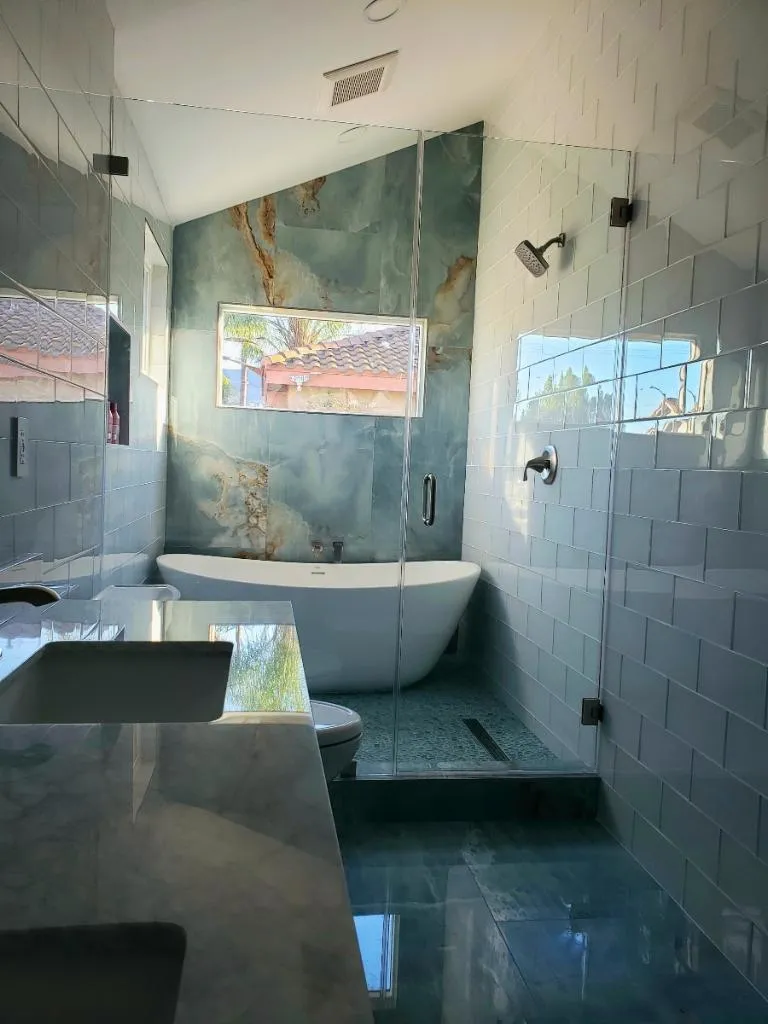
We weren’t about to tile over a live problem, so we treated the slab first and then laid a crack-isolation and waterproofing membrane across the entire floor. The owners wanted the warmth of wood without the water risk, so they went with a wood-look porcelain plank, and since their mornings ran cold we set a heated mat underneath during the same install. The finished floor reads like natural oak, shrugs off water, and stays comfortable in winter. A project like that is a good reminder for our crew at Top of Mind Home Remodeling that the visible floor is only ever as good as the prep and waterproofing hidden beneath it, which is the part we never rush.
Frequently Asked Questions
What is the best flooring for a bathroom?
For most bathrooms, porcelain tile and luxury vinyl plank are the top choices. Porcelain is the most durable and adds resale value, while LVP is more affordable, warmer underfoot, and fully waterproof. The best pick depends on your budget and how the room is used.
Is vinyl or tile better for bathrooms?
Both work well because both can be waterproof. Tile is more durable and valuable but colder and pricier. Vinyl is softer, warmer, cheaper, and quicker to install. Tile suits primary baths that see heavy use, while vinyl is great for guest and kids’ bathrooms.
Can you put hardwood in a bathroom?
Solid hardwood is a poor choice for any bathroom with a tub or shower because moisture makes it swell and rot. If you want a wood look, wood-look porcelain tile or quality luxury vinyl plank gives you the same feel without the water risk.
What flooring is best for a small bathroom?
Larger tiles with fewer grout lines and lighter colors make a small bathroom feel more open. Porcelain and LVP both work well, and running the same flooring throughout helps the space read as bigger.
How long does bathroom floor installation take?
A standard bathroom floor in LA usually takes three to five days of installer time. That covers prep and waterproofing, setting the tile or planks, and allowing grout to cure before the floor is used.
Ready to Get Your Bathroom Floor Right?
A bathroom floor is one of those upgrades you feel every day and only notice when something goes wrong. The safest path is a material that fits how you actually live, an honest budget for the prep under the surface, and waterproofing that never gets shortchanged.
At Top of Mind Home Remodeling, that same thinking shapes how we approach bathroom remodeling in Los Angeles, and the specifics for your home come together fastest with a walkthrough.